

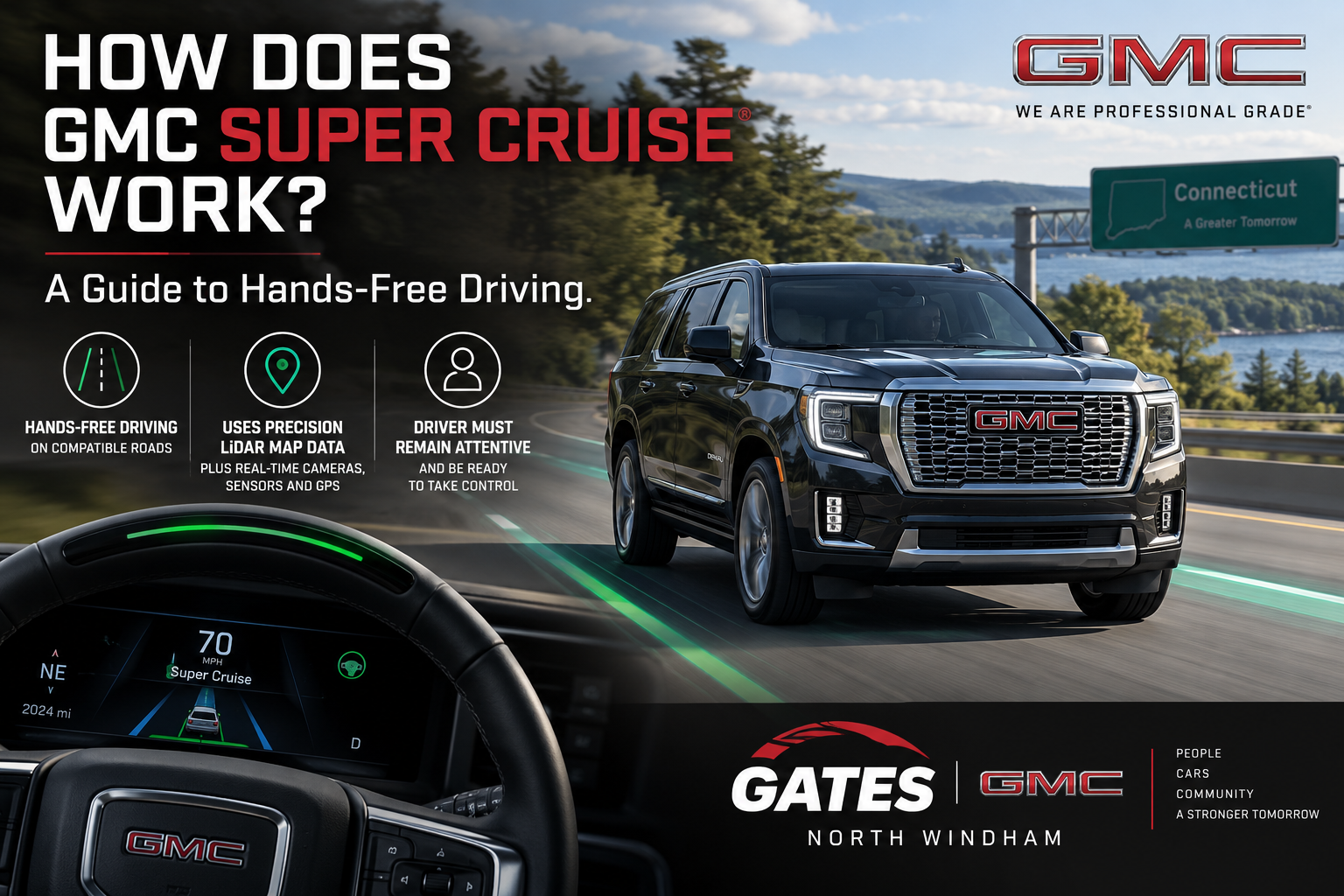
If you’ve been shopping for a new GMC, you may have seen Super Cruise® listed as an available feature on select models. But what exactly is Super Cruise, and how does hands-free driving actually work? Super Cruise is GMC’s advanced driver-assistance technology designed to allow hands-free driving on compatible roads when conditions are appropriate. Using a combination of cameras, radar sensors, GPS, precision map data and Adaptive Cruise Control, Super Cruise can help control your vehicle’s steering, acceleration and braking while you keep your attention on the road. For drivers in Connecticut who spend plenty of time commuting, traveling on the highway or heading out on longer road trips, Super Cruise can completely change the way a properly equipped GMC feels on the road. What Is GMC Super Cruise? Super Cruise is a hands-free driver-assistance system available on select GMC vehicles. When you’re traveling on a compatible road and the necessary conditions are met, the system can help keep your GMC centered in its lane while Adaptive Cruise Control manages your set speed and following distance. The important distinction is that Super Cruise is not self-driving technology. You are still responsible for the vehicle and must remain attentive and ready to take control at any time. What makes Super Cruise unique is the technology working behind the scenes to determine where your vehicle is, what is happening around it and whether conditions are appropriate for hands-free driving. How Does Super Cruise Work? Super Cruise brings several technologies together to help your GMC understand its position on the road. The system uses precision LiDAR map data, real-time cameras, radar sensors, GPS data and Adaptive Cruise Control. Together, these systems help determine the vehicle’s position within the lane, monitor surrounding traffic and maintain an appropriate speed and following distance. When Super Cruise determines that you’re on a compatible road and conditions are right, a Super Cruise symbol will appear in the driver display. Once the system is activated and the light bar at the top of the steering wheel turns green, you can remove your hands from the steering wheel. Even though your hands can be off the wheel, your attention can’t be off the road. How Does Super Cruise Know You're Paying Attention? One of the most important parts of Super Cruise is the Driver Attention System. A small camera located near the steering wheel monitors the position of your head and eyes to help determine whether you are paying attention to the road. If the system detects that your attention has moved away from the road, it can provide alerts telling you to refocus or take control of the vehicle. That means Super Cruise isn't an opportunity to check your phone, answer emails or stop paying attention. Think of it as technology designed to assist an attentive driver—not replace one. Can Super Cruise Change Lanes for You? On appropriately equipped GMC models, Super Cruise can offer lane-change functionality as well. With Turn Signal Activated Lane Change, you can activate your turn signal to request a lane change. Super Cruise will look for an opening in the selected lane and, when conditions allow, steer the vehicle through the lane change. Certain versions of Super Cruise can also perform Automatic Lane Changes. For example, the system may initiate a lane change to pass a slower vehicle, move away from a lane that is ending or provide additional space for merging traffic. Available capabilities vary by vehicle, model year and equipment, so it's important to check the specific GMC you're considering. Where Can You Use GMC Super Cruise? Super Cruise doesn't activate on every road. GM has mapped a large network of compatible roads throughout North America for Super Cruise operation. The vehicle also needs to be able to clearly detect lane markings, have access to GPS and meet other operating conditions before hands-free driving becomes available. Weather, road conditions and dirt or debris covering the vehicle's cameras or sensors can also affect whether Super Cruise is available. If the system determines that hands-free operation is no longer appropriate, it will alert you to take control. What Do the Super Cruise Light Bar Colors Mean? The light bar built into the steering wheel gives you an easy way to understand what Super Cruise is doing. Green: Super Cruise is active and hands-free driving is available. Blue: You are manually steering, and Super Cruise is temporarily allowing you to control the steering. Flashing alerts: The system may be asking you to pay attention or take control. You should always watch the driver information display and follow the vehicle's prompts while using Super Cruise. Does Super Cruise Work in Traffic? Yes, Super Cruise can operate in both highway driving and stop-and-go traffic when you're on a compatible road and the necessary conditions are met. Because Adaptive Cruise Control can manage speed and following distance while Super Cruise assists with steering, the technology can be especially useful during longer highway drives and commutes. Want to Experience Super Cruise for Yourself? Reading about hands-free driving is one thing. Seeing it operate from behind the wheel is another. If you're interested in a GMC equipped with Super Cruise, the team at Gates GMC Nissan in North Windham, Connecticut can help you explore vehicles with the technology, understand the features included on a specific model and learn how to use Super Cruise properly. [SHOP NEW GMC INVENTORY] Is GMC Super Cruise Worth Considering? If you regularly take long highway trips, commute throughout Connecticut or simply enjoy having the latest driver-assistance technology in your vehicle, Super Cruise is a feature worth learning about. It can help reduce some of the workload involved with highway driving while still keeping the driver actively involved and attentive. Features such as hands-free lane centering, Adaptive Cruise Control and available lane-change capabilities can make a properly equipped GMC feel significantly different on a long drive. Just remember: hands-free does not mean attention-free. You remain responsible for safely operating the vehicle and must be ready to take control whenever necessary. Find a GMC With Super Cruise in North Windham, CT Want to see which GMC models currently available at Gates GMC Nissan offer Super Cruise? Browse our new GMC inventory, contact our team or stop by Gates GMC Nissan in North Windham, CT. We can help you compare models, explain available Super Cruise equipment and find a GMC that fits the way you drive. Whether you're looking for a capable truck, a family SUV or some of GMC's newest technology, our team is here to help you find the right vehicle. [VIEW NEW GMC INVENTORY] [CONTACT GATES GMC NISSAN] [LEARN MORE ABOUT GMC SUPER CRUISE] Super Cruise is a driver-assistance technology and is not a substitute for driver attention. Always pay attention while driving and when using Super Cruise, use the system in accordance with applicable laws, and be prepared to take control. Availability, functionality and compatible roads vary by vehicle and equipment. An active Super Cruise plan or trial may be required.
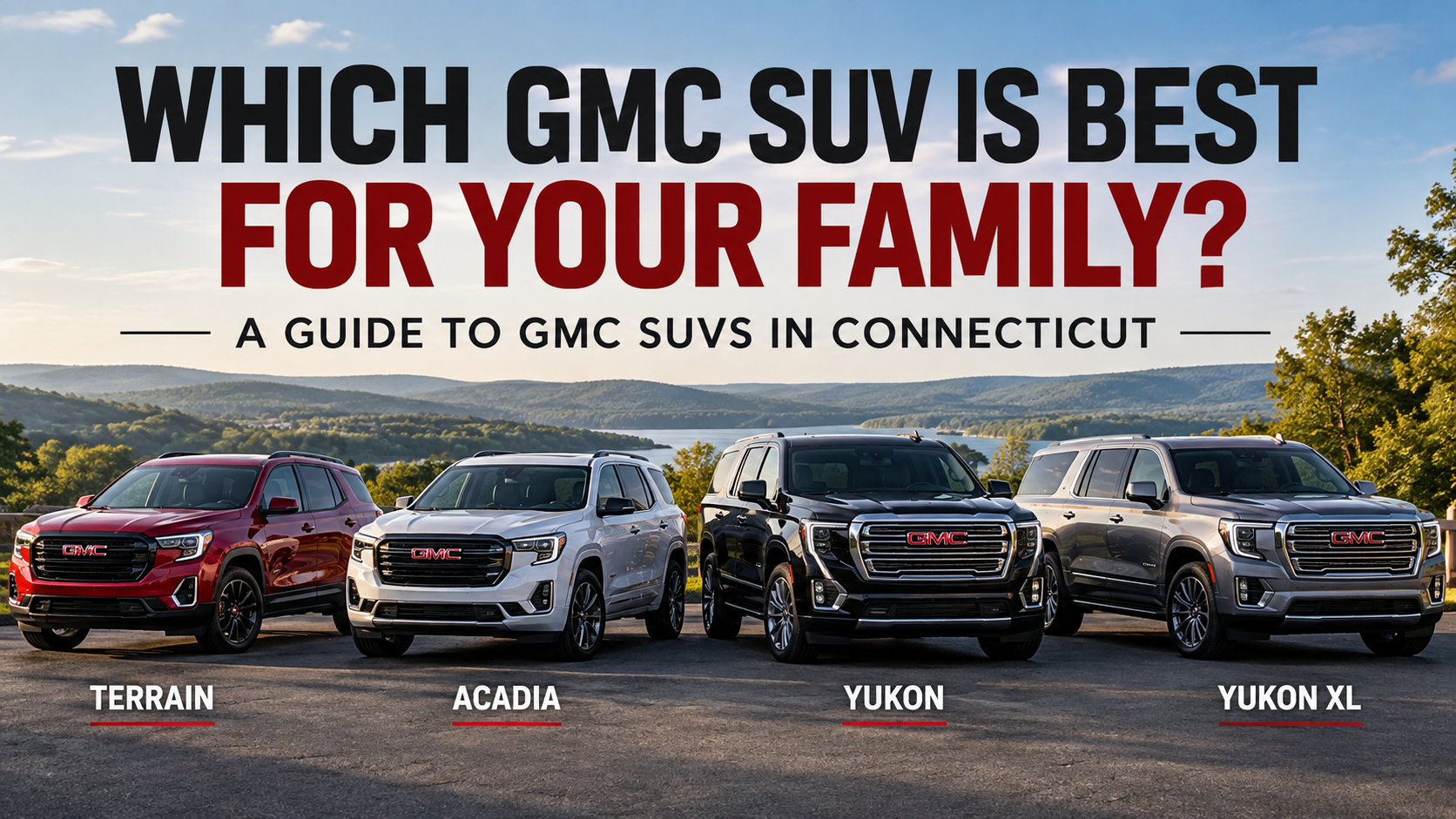
Which GMC SUV Is Best for Your Family? A Guide to GMC SUVs in Connecticut
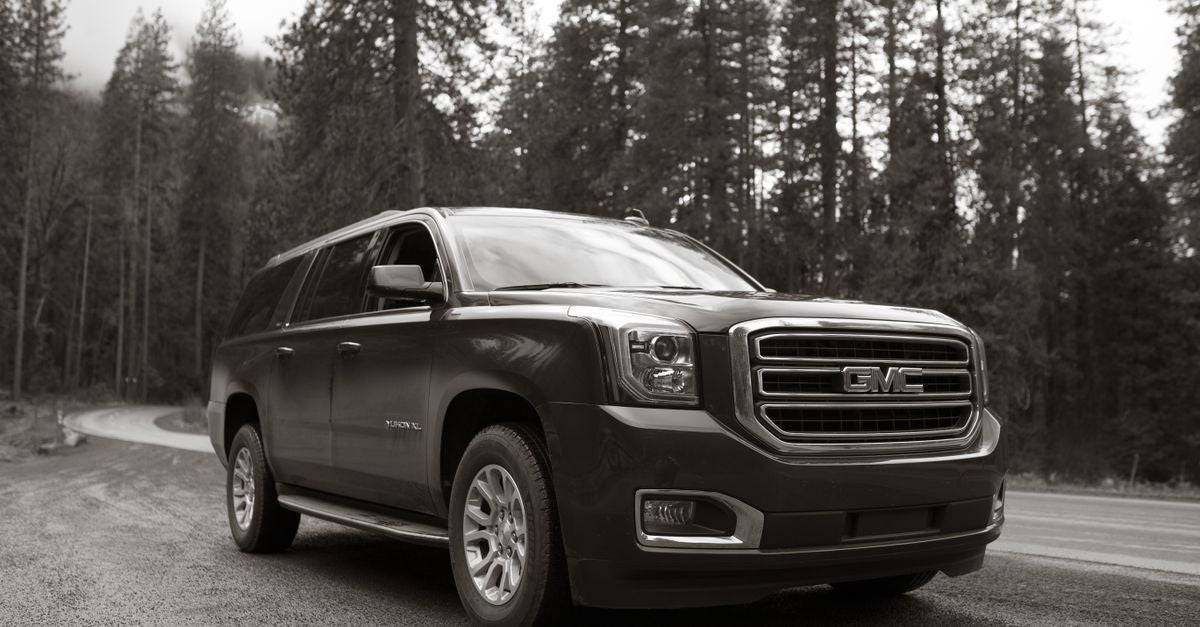
Which GMC SUV Is Best for Your Family? A Guide to GMC SUVs in Connecticut Shopping for a GMC SUV in Connecticut but not sure which model is the best fit for your family? From daily commutes and school drop-offs to weekend road trips and family vacations, choosing the right SUV comes down to much more than simply counting seats. GMC offers several SUV options for different lifestyles, including the compact GMC Terrain, three-row GMC Acadia, full-size GMC Yukon, and spacious GMC Yukon XL. At Gates GMC Nissan in North Windham, CT, we help drivers from North Windham, Mansfield, Norwich, Coventry, and surrounding Connecticut communities find vehicles that fit their everyday needs. So, which GMC SUV is best for your family? Let's compare the 2026 GMC Terrain, Acadia, Yukon, and Yukon XL. 2026 GMC Terrain: A Great Everyday Family SUV If you want the versatility of an SUV without driving something oversized, the 2026 GMC Terrain is a great place to start. The Terrain seats up to five passengers and offers up to 63.5 cubic feet of cargo space behind the first row with the rear seats folded, giving families plenty of flexibility for groceries, sports equipment, luggage, and everyday gear. Its smaller footprint can also make the Terrain a convenient option for commuting, running errands, school drop-offs, and navigating parking lots. Technology is another highlight. Depending on configuration, Terrain shoppers can find features such as a 15-inch diagonal Premium GMC Infotainment System, available camera views, an available AutoSense power liftgate, and a wide range of standard safety and driver-assistance technologies. Want to take a closer look? Explore the 2026 GMC Terrain at Gates GMC. Who is the GMC Terrain best for? The Terrain may be a great fit if: You have a smaller family You primarily need two rows of seating You want an SUV that's easy to use for everyday driving Parking and maneuverability matter to you You still want flexible cargo room for everyday life For couples, young families, commuters, or anyone who doesn't need a third row, the Terrain offers a practical combination of technology, comfort, and versatility. 2026 GMC Acadia: Three-Row Versatility for Growing Families Need a third row but aren't sure you want to jump all the way to a full-size SUV? That's where the 2026 GMC Acadia comes in. The Acadia is GMC's three-row mid-size SUV, making it an appealing option for growing families and drivers who regularly carry additional passengers. Its larger interior gives families more flexibility when balancing passengers and cargo, while its mid-size dimensions can make it easier to manage than a full-size SUV. The Acadia also offers modern GMC technology and available features designed to make longer drives more comfortable. Depending on trim and configuration, shoppers can find advanced driver-assistance technology, large infotainment displays, premium interior options, and plenty of family-friendly convenience features. You can browse new GMC inventory at Gates GMC to see current Acadia availability and other GMC SUVs for sale in North Windham. Who is the GMC Acadia best for? Consider the Acadia if: You need three rows of seating Your family is growing You regularly carry kids, friends, or additional passengers You want more room than a compact SUV You don't necessarily need the size of a Yukon You want a balance of everyday usability and family space For many Connecticut families, the Acadia can be the sweet spot between a smaller crossover and a full-size SUV. 2026 GMC Yukon: Full-Size Space and Capability For families who need even more room, capability, and available premium features, there's the 2026 GMC Yukon. The Yukon is a full-size, three-row SUV designed for drivers who want generous passenger space without giving up capability. Its larger size makes it especially useful for family road trips, sports equipment, luggage, and busy households that regularly use all three rows. The Yukon lineup also offers access to some of GMC's most advanced available technology and premium features. Depending on configuration, that can include Super Cruise hands-free driver assistance, premium interior appointments, advanced camera technology, and available capability-focused features. If Super Cruise is one of the features you're considering, read our guide to How GMC Super Cruise Works to learn more about GMC's available hands-free driving technology. Who is the GMC Yukon best for? The Yukon may make sense if: You have a larger family You regularly use all three rows You want full-size SUV capability You take frequent family road trips You have significant passenger or cargo needs You want access to premium GMC technology and features The Yukon is a strong option for drivers who don't want to choose between family practicality, capability, and comfort. Check our new GMC inventory in North Windham to see current Yukon availability. 2026 GMC Yukon XL: Maximum Room for Passengers and Cargo Need even more space? That's where the GMC Yukon XL comes in. The Yukon XL takes the full-size Yukon formula and adds additional room, making it an excellent option for families who regularly need three rows of passengers and space for everyone's belongings. That extra cargo capacity can be especially valuable for road trips, sports families, vacations, camping gear, strollers, or simply those days when it feels like the entire house is coming along for the ride. Who is the GMC Yukon XL best for? Consider the Yukon XL if: You regularly travel with a full vehicle You need three rows without sacrificing as much cargo room You take long family road trips You frequently transport sports equipment, luggage, strollers, or other large items Maximum interior space is one of your top priorities If you've ever filled every seat in an SUV and then wondered where everyone's luggage was supposed to go, the Yukon XL deserves a closer look. You can see available Yukon XL models and other new GMC SUVs for sale at Gates GMC. GMC Terrain vs. Acadia vs. Yukon vs. Yukon XL: Which Is Best for Your Family? There isn't one GMC SUV that's right for every family. The best choice depends on how many people you regularly carry, how much cargo space you need, and how you use your vehicle. Choose the GMC Terrain if: You want a smaller two-row SUV that's practical for commuting, errands, and everyday family life. Choose the GMC Acadia if: You want three-row versatility and additional passenger space without moving all the way up to a full-size SUV. Choose the GMC Yukon if: You want a full-size SUV with three-row seating, strong capability, advanced technology, and available premium features. Choose the GMC Yukon XL if: You want maximum passenger and cargo versatility, especially if you regularly use the third row while carrying plenty of gear. A family commuting around eastern Connecticut may have very different needs from a larger family that regularly travels with luggage, sports equipment, or a trailer. That's why comparing these SUVs side by side can make choosing the right one much easier. Shop GMC SUVs in North Windham, Connecticut Still deciding between the GMC Terrain, Acadia, Yukon, and Yukon XL? Sometimes the easiest way to find the right family SUV is to experience the differences in person. At Gates GMC Nissan in North Windham, you can compare GMC SUVs, explore different trims and features, and find a vehicle that fits your family's lifestyle. Whether you're looking for the everyday versatility of a Terrain, the three-row flexibility of an Acadia, the full-size capability of a Yukon, or the additional room of a Yukon XL, our team is here to help. Browse our new GMC inventory to see what's currently available, or contact Gates GMC to learn more about a vehicle or plan your visit. Gates GMC Nissan 143 Boston Post Road North Windham, CT 06256